Level 3 Spanish Workbook · Ages 9–10
Exploring Spanish Through Grammar, Culture, and Faith
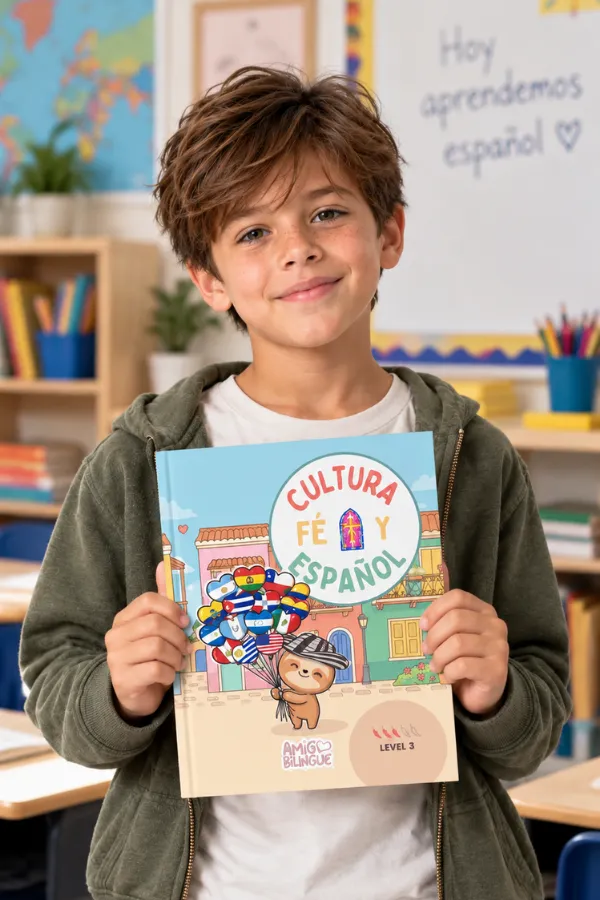
Designed for Grade 3 learners, Level 3 helps students move beyond foundational vocabulary toward more developed language skills. Students review familiar topics, explore the verb ir through the places and activities of a city, use tener to describe imaginative Mexican alebrijes, and begin working with more grammar and verb conjugation. Cultural discoveries, faith-based lessons, creative writing, and oral storytelling help students use Spanish with greater purpose and confidence.
A World of Learning in Every Workbook
Level 3 connects Spanish language development with Hispanic geography, artistic traditions, biblical stories, and Catholic faith. Students revisit familiar vocabulary while applying it in new contexts that encourage them to describe, compare, ask questions, and communicate more independently.
Grammar & Growing Language Skills
Students review foundational vocabulary while expanding their understanding of Spanish grammar. The verb ir introduces language for talking about destinations and places in the city, while tener helps students describe people and objects. Early verb conjugation and increasingly structured language activities support continued growth in Spanish reading and writing.
Faith-based learning
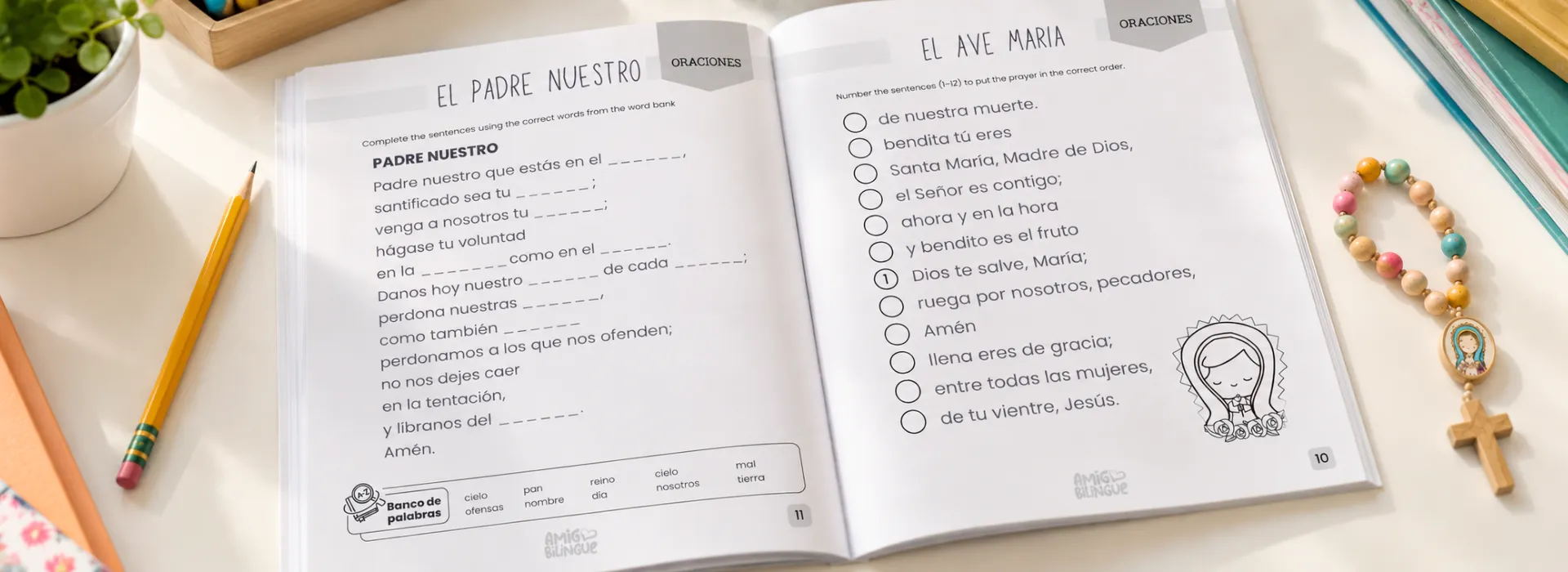
Faith-based learning connects Spanish with biblical stories and Catholic traditions. In the creation-themed unit, students explore nature and its vocabulary, bringing the lesson together through a picnic with Adam and Eve that revisits fruit vocabulary. The reader’s-theater skit about Our Lady of Guadalupe gives students an opportunity to practice spoken Spanish while engaging with an important Catholic devotion.
Discover Hispanic Countries & Traditions
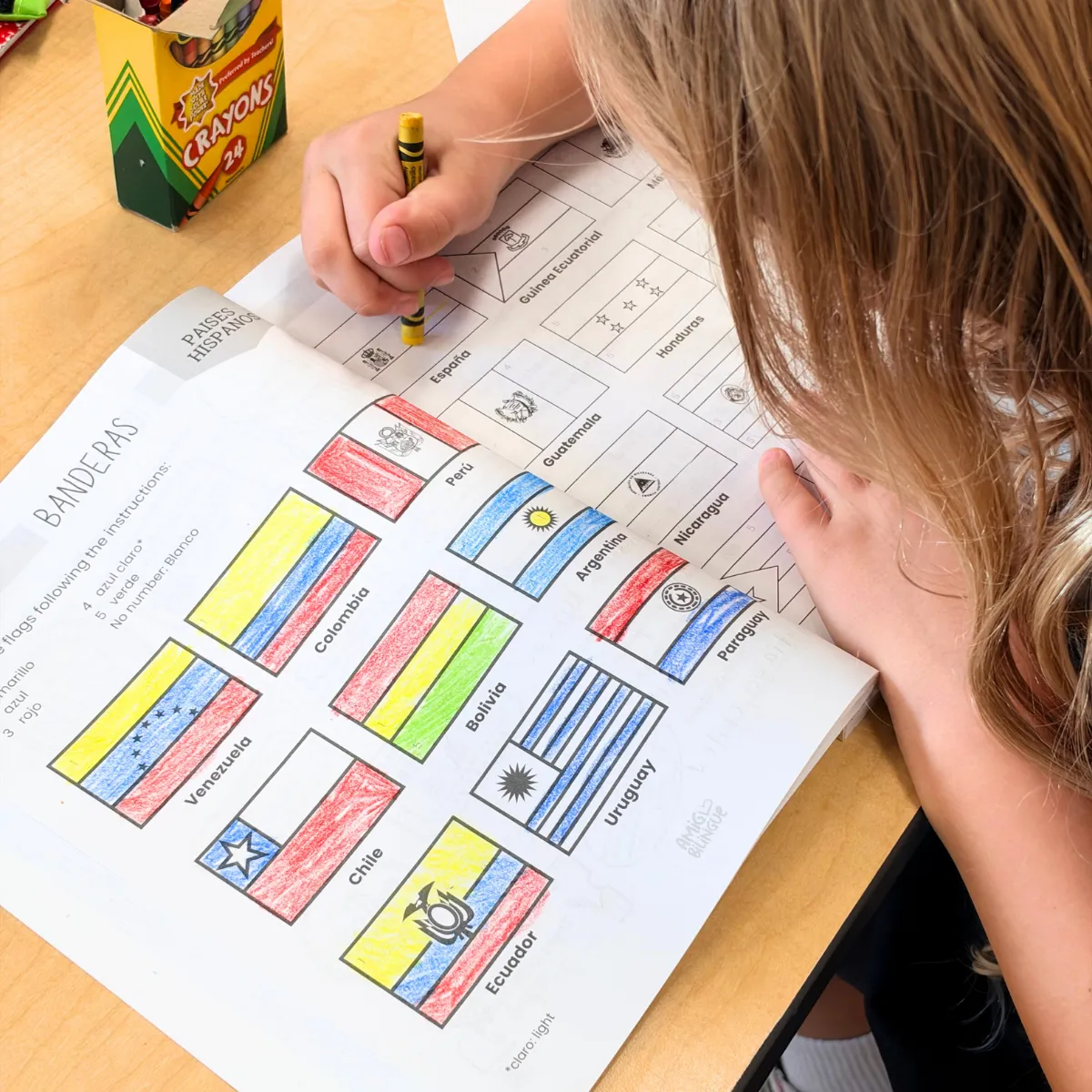
Students explore Spanish-speaking countries, their capitals, and their flags, developing geographical knowledge alongside Spanish vocabulary. They also discover Guatemala’s colorful tradition of giant kites associated with Día de los Muertos. Through Mexican alebrijes, students connect language learning with imaginative folk art, practicing descriptions while learning about a distinctive Mexican cultural tradition
Describe, Create & Communicate
Students use Spanish to describe colorful alebrijes, talk about destinations in a city, and connect vocabulary across related topics. The verb tener supports descriptive language, while the Guadalupe skit encourages expressive oral communication. Creative and thematic activities help students bring together vocabulary, grammar, cultural knowledge, and faith in meaningful ways.
BUILDING LANGUAGE THROUGH READING, WRITING & COMMUNICATION
From Familiar Vocabulary to More Developed Spanish
At level 3, students are ready to connect vocabulary with more structured language. Level 3 revisits familiar concepts while introducing new grammatical patterns, early verb conjugation, and opportunities to use Spanish to describe, explain, and communicate. Each thematic unit gives students a meaningful context for practicing the language.
Step 1
Review & Expand Foundational Vocabulary
Students revisit weather, days and months, seasons, colors, and school supplies. Reviewing these familiar topics strengthens vocabulary retention and prepares students to use Spanish in longer activities and more developed language tasks.
Step 2
Explore the City with the Verb Ir
Students learn about places in the city while exploring the verb ir. This connection helps them associate grammar with meaningful destinations and everyday situations. City vocabulary provides a context for practicing how to talk about where people go and for building more complete expressions in Spanish.
Step 3
Alebrijes and the Verb Tener
Through the study of Mexican alebrijes, students use the verb tener to describe imaginative creatures and their characteristics. The unit brings together descriptive vocabulary, grammar, and Mexican folk art, encouraging students to apply language structures while expressing what they observe.
Step 4
Stories, Faith & Communication
Explore nature and fruit vocabulary through the creation-themed unit and the picnic with Adam and Eve. Practice spoken Spanish through a reader’s-theater skit about Our Lady of Guadalupe. Multiple opportunities to use language expressively while connecting Spanish with faith, storytelling, and cultural understanding.
Curriculum Alignment.
Built on Meaningful Learning
Cultura, Fe y Español curriculum– features learning objectives informed by relevant Spanish language standards, including the ACTFL World-Readiness Standards for Learning Languages.
Classroom-tested and refined through real teaching experience, this curriculum provides engaging, structured learning experiences that connect language development with Hispanic culture and Catholic faith. Students apply Spanish in meaningful contexts while strengthening communication, cultural understanding, and confidence.
Ready for the next level of Spanish?
Help students grow into more confident Spanish learners through grammar, descriptive language, creative activities, Hispanic cultural discoveries, and meaningful faith connections. Cultura, Fe y Español Level 3 gives students opportunities to apply what they know while developing new ways to communicate in Spanish.